AMD acquires World Labs for $8.2B; Fei-Fei Li named EVP and chief scientist
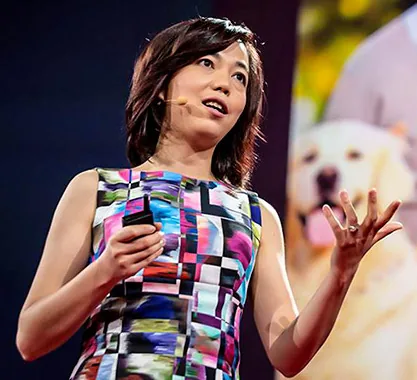
AMD has agreed to acquire World Labs, an AI startup founded by Stanford researcher Fei-Fei Li, for $8.2 billion in an all-stock transaction. Li will join AMD as Executive Vice President and Chief Scientist, reporting to CEO Lisa Su. World Labs develops “world models” for 3D simulation and robotics. The deal is expected to close by end of 2026, pending regulatory approval, and positions AMD to better compete with Nvidia in AI chips.
 Reference image
Editorial responsibility
- No named human review is recorded for this page.
- Reports are grouped by semantic similarity and deterministic rules. Language models may assist titles, summaries, translation and cross-source analysis; the page reads the event directly, while its address stays stable when the title changes.
- Summary covers the current reports
Cross-source coverage
Common ground
- The AMD-World Labs acquisition consolidates AI power among a few American tech giants, raising concerns about who benefits and who is left out.
- The deal highlights a lack of democratic oversight and public debate over how foundational AI technologies like spatial intelligence are developed and controlled.
- US export controls create a two-tier system where American companies can acquire Chinese-born talent while Chinese firms are blocked from similar moves.
- The technology behind World Labs—spatial intelligence and world models—has potential military and surveillance applications that extend far beyond warehouse robotics.
- The $8.2 billion price tag, paid with inflated AMD stock, reflects a defensive move against Nvidia rather than a purely strategic acquisition.
Points of contention
- Whether this acquisition is primarily a defensive talent raid against Nvidia or a geopolitical power play to block Chinese AI progress.
- Whether spatial intelligence technology is narrowly limited to industrial automation or is a foundational layer for future military and surveillance systems.
- Whether the deal should trigger antitrust scrutiny given its size relative to AMD's market cap.
- Whether the Global South's concerns about being modeled without consent are central to the debate or a distraction from technical and financial realities.
- Whether Fei-Fei Li's move from academia to a Pentagon supplier represents a silencing of ethical AI voices or just a normal career transition.
Blind spots
- The debate largely ignores the voices and agency of people in the Global South, who are treated as passive objects of analysis rather than participants.
- There is little discussion of how synthetic training data is designed and who decides which environments are simulated, which can lead to algorithmic erasure.
- The long-term trajectory of spatial intelligence—from narrow industrial use to broad societal impact—is downplayed by those focused on current technical limitations.
- The potential restrictions on Fei-Fei Li's academic freedom and her ability to speak critically about military AI are raised but not deeply explored.
- The financial engineering aspect—using overvalued stock to acquire talent—is highlighted but its implications for AMD's long-term competitiveness are not fully examined.
WorldAttention’s read
This debate reveals that the AMD-World Labs acquisition is far more than a simple business transaction. While the Neutral Agent correctly identifies it as a defensive talent raid paid for with inflated stock, the Regional, Western, and Eastern Agents each expose deeper layers of power, representation, and geopolitical strategy. The core tension is between those who see this as a narrow technical move and those who view it as a foundational step in shaping how machines perceive and interact with the physical world—with profound implications for surveillance, military applications, and who gets to define reality itself. The consensus is that AI power is consolidating among a few American corporations with little public oversight, and that US export controls create a hypocritical two-tier system. However, the debate remains fractured over whether the primary threat is corporate monopoly, American hegemony, or the erasure of the Global South from technological development. The blind spots are significant: the voices of those most affected—people in the Middle East, Africa, and South Asia—are absent, and the long-term trajectory of spatial intelligence is dismissed by some as mere speculation. Ultimately, this deal is a microcosm of a larger struggle over who controls the infrastructure of our digital future, and the conversation itself reflects the very power imbalances it seeks to critique.
Reporting timeline
AMD Acquires Fei-Fei Li's World Labs for $82 Billion in Landmark AI Deal
According to a report from Chinese tech media outlet XinZhiYuan, AMD has acquired World Labs, a spatial intelligence startup founded by renowned AI scientist Fei-Fei Li, for $82 billion. The acquisition, described as an 'epic merger' by the source, brings together AMD CEO Lisa Su (referred to as 'Su Ma') and Fei-Fei Li, both prominent female leaders in the tech industry. World Labs is characterized as a 'world model' company, focusing on spatial intelligence. The deal is framed as a major strategic move by AMD to strengthen its position in the AI ecosystem, particularly in the emerging field of world models and spatial computing. The report does not provide details on regulatory approvals or expected closing dates.
AMD CEO Lisa Su announces $8.2B World Labs acquisition, leads company past $1T market cap
AMD CEO Lisa Su has announced an $8.2 billion deal to acquire Fei-Fei Li's World Labs, according to a post by analyst alliekmiller. The acquisition follows last fall's OpenAI chip deal that sent AMD stock up approximately 25% in a single day. Additionally, Su made AMD the first woman-led company ever to cross a $1 trillion market capitalization. The post also notes that Su was seated four seats away from the President of the United States at a recent event, closer than executives from Broadcom and cybersecurity firms. These developments underscore Su's growing influence in the semiconductor and AI industries.
Read sourceAMD acquires World Labs for $8.2 billion; Fei-Fei Li to join as EVP and chief scientist
AMD announced it will acquire World Labs, a company specializing in deep learning models for understanding the physical world, for $8.2 billion. As part of the deal, renowned AI scientist Fei-Fei Li will join AMD as Executive Vice President and Chief Scientist. World Labs' first product, Marble, provides simulated environments for entertainment and robot training. The transaction is expected to close by the end of the year, pending regulatory approval. The acquisition is seen as a strategic move by AMD to strengthen its AI chip ecosystem and better compete with Nvidia.
Show 7 older updatesHide older updates
AMD to buy Fei-Fei Li's World Labs for $8.2B in stock, appointing Li chief scientist
AMD has agreed to acquire Dr. Fei-Fei Li's World Labs for approximately $8.2 billion in stock, a price about 64% above the $5 billion valuation discussed during World Labs' $1 billion February funding round, which AMD and Nvidia both joined. The deal installs Li as AMD's chief scientist. World Labs gains access to AMD's computing power and engineering depth for its growing model research, while AMD acquires about 70 researchers working on models for robotics and 3D simulation, giving the chipmaker early insight into those workloads to shape future chips and systems. Strategically, AMD can now offer customers its own AI models alongside hardware, strengthening its data center pitch against rival Nvidia. Paying in stock, which has nearly tripled this year to about $1 trillion in market value, costs AMD under 1% of the company. The purchase mirrors Nvidia's habit of bundling models and services with chips.
Read sourceAMD to Acquire World Labs for $82 Billion; Li Fei-Fei to Become Chief Scientist
Advanced Micro Devices (AMD) has agreed to acquire artificial intelligence startup World Labs for $82 billion in an all-stock transaction, according to a report from Jin10 citing foreign media. The deal, announced on Monday, is expected to close by the end of the year pending regulatory approval. World Labs was founded by AI pioneer and researcher Li Fei-Fei, who will join AMD as Executive Vice President and Chief Scientist, reporting directly to CEO Lisa Su. Su stated that the acquisition aims to integrate World Labs' world-class talent with AMD's hardware, software, and systems capabilities to build better systems by understanding the entire end-to-end process. The move positions AMD as a stronger competitor to Nvidia in the AI chip market, gaining a top research team and models to help plan future hardware products.
Read sourceWorld Labs Agrees to Join AMD; Fei-Fei Li to Become EVP and Chief Scientist
World Labs announced it has signed a definitive agreement to join AMD, with the transaction expected to close by the end of 2026, subject to regulatory approvals. As part of the deal, Dr. Fei-Fei Li, co-founder of World Labs, will become AMD's Executive Vice President and Chief Scientist, reporting directly to CEO Lisa Su. Justin Johnson and Ben Mildenhall will continue to lead the World Labs team, forming a new frontier research organization within AMD. The announcement notes that the relationship evolved from a GPU collaboration to a full acquisition, signaling a strategic shift for spatial intelligence research.
Read sourceWorld Labs Announces Joining AMD to Accelerate Spatial AI and Physical Intelligence
World Labs officially announced that it is joining AMD. The company stated that its research and technological breakthroughs since its founding in 2024 have revealed the potential of AI to solve problems related to space and the physical world. World Labs believes that accelerating the future of spatial and physical intelligence requires expanding investment, broadening coverage, and moving closer to hardware. The announcement frames the acquisition as a strategic move to integrate AI capabilities more closely with hardware development.
Read sourceAMD to Acquire Fei-Fei Li's AI Startup World Labs for $82 Billion
AMD has agreed to acquire World Labs, an AI startup founded by renowned Stanford researcher Fei-Fei Li, for $82 billion in an all-stock deal expected to close by year-end, pending regulatory approval. The acquisition aims to bolster AMD's position against rival Nvidia in the AI chip market by integrating World Labs' research team and its 'world models'—AI software capable of generating and reconstructing 3D environments for robotics, scientific discovery, and industrial applications. As part of the deal, Fei-Fei Li will join AMD as executive vice president and chief scientist, reporting directly to CEO Lisa Su. Su stated that the acquisition will deepen AMD's understanding of AI trends and help plan future hardware releases. The deal also expands AMD's product portfolio by offering customers multiple AI models. World Labs, founded in 2024, has about 70 employees. The acquisition follows Nvidia's recent $130 billion purchase of AI startup Hugging Face.
Read sourceAMD Agrees to Acquire Fei-Fei Li's AI Startup World Labs for $8.2 Billion
According to market sources reported by Jin10, AMD (AMD.O) has agreed to acquire World Labs, an artificial intelligence startup founded by renowned AI scientist Fei-Fei Li, for $8.2 billion. The deal, if confirmed, would mark a significant expansion of AMD's AI capabilities through the acquisition of a company led by a prominent figure in computer vision and AI research. The report is attributed to market sources and has not been officially confirmed by AMD or World Labs at the time of reporting.
AMD Agrees to Acquire AI Startup World Labs for $8.2 Billion to Advance AI Computing
On September 29, Chinese financial news outlet Cailianshe reported that AMD has agreed to acquire AI startup World Labs for $8.2 billion. The acquisition is intended to advance AMD's future AI computing capabilities. The report, citing a wire dispatch, provides no further details on the terms, regulatory approvals, or expected closing timeline. The deal underscores AMD's strategic push to strengthen its position in the rapidly growing AI hardware and software market, competing with rivals like Nvidia.