Justice Alito Recuses from Major Climate Case Suncor Energy v. Boulder County
Justice Samuel Alito recused himself from Suncor Energy v. Boulder County, a landmark Supreme Court climate case, one week before oral arguments. Alito described the decision as a "difficult judgment call," citing his wife's inherited energy stocks. The recusal, following pressure from watchdog groups, leaves an eight-person bench and raises the possibility of a 4-4 split.
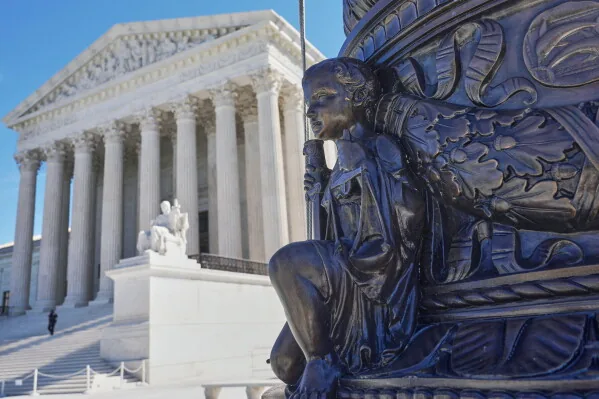 Reference image
Editorial responsibility
- No named human review is recorded for this page.
- Reports are grouped by semantic similarity and deterministic rules. Language models may assist titles, summaries, translation and cross-source analysis; the page reads the event directly, while its address stays stable when the title changes.
- Summary covers the current reports
Cross-source coverage
Reporting timeline
Justice Alito Says Recusal in Suncor Energy v. Boulder County Was a Difficult Judgment Call
Bloomberg reports that Justice Samuel Alito described his last-minute decision to recuse from Suncor Energy v. Boulder County, the first case of the Supreme Court's term, as a 'difficult judgment call.' The case is a major climate change preemption dispute. Alito initially participated when the court agreed to hear the case in February but decided to step aside after deeper review before oral arguments. A coalition of watchdog and environmental groups had called for his disqualification. Alito stated that recusal was 'the prudent step' given the arguments from both sides. He noted that federal law requires recusal only if a judge owns stock in a party to the case, not in companies that could be affected, and that his legal office advised he was not required to recuse. Alito explained that his wife inherited the energy shares and wishes to hold onto individual stock, including in oil and gas companies.
Justice Alito Cites 'Difficult Judgment Call' in Recusal From Climate Case
Bloomberg reports that Justice Samuel Alito made a last-minute decision to recuse himself from Suncor Energy v. Boulder County, the first major climate change preemption case of the Supreme Court's term. In an interview, Alito described the decision as a 'difficult judgment call.' He stated that while he participated when the court agreed to hear the case in February, he decided to back out after deeper review before oral arguments. A coalition of watchdog and environmental groups had called for his disqualification. Alito noted that federal law requires recusal only if a judge owns stock in a party to the case, not in companies that could be affected, and his legal office advised he was not required to recuse. He explained that his wife inherited the energy shares and wishes to hold onto individual stock, leading to holdings in oil and gas companies. Alito concluded that recusal was 'the prudent step' given the arguments on both sides.
Justice Samuel Alito Recuses from Major Climate Case After Pressure Over Oil Investments
Supreme Court Justice Samuel Alito recused himself on September 28, 2026, from the upcoming climate change case Suncor Energy Inc. v. County Commissioners of Boulder County, according to a letter from court clerk Scott Harris. The case pits ExxonMobil and Suncor Energy against Boulder County, Colorado, as the oil companies seek to dismiss a county lawsuit for climate-related damages. Alito faced mounting pressure from progressive groups like Consumer Watchdog to step down due to his personal investments in ConocoPhillips and Phillips 66, which are involved in similar lawsuits and could be affected by the ruling. Alito had previously stated he saw no need to recuse. His recusal leaves an eight-person bench, raising the possibility of a 4-4 split. The case involves arguments over whether state law is preempted by federal law on greenhouse gas emissions, complicated by the Trump administration's rollback of EPA authority. Consumer Watchdog's Alexandra Nagy praised the recusal as the right decision that should have been made from the start.
Read sourceShow 7 older updatesHide older updates
Samuel Alito Recuses from Major Climate Case After Pressure Over Oil Investments
Supreme Court Justice Samuel Alito recused himself on September 28, 2026, from the upcoming climate change case Suncor Energy Inc. v. County Commissioners of Boulder County, which involves ExxonMobil and Suncor Energy seeking to dismiss a county lawsuit for climate-related damages. The recusal, announced via a letter from court clerk Scott Harris, came after mounting pressure from progressive groups like Consumer Watchdog, citing Alito's personal investments in ConocoPhillips and Phillips 66, which are involved in similar lawsuits. Alito had previously stated he saw no need to withdraw. His recusal reduces the court to an eight-person bench, raising the possibility of a 4-4 split. The case centers on whether state law is preempted by federal law on greenhouse gas emissions, complicated by the Trump administration's rollback of EPA authority. Consumer Watchdog's Alexandra Nagy praised the decision, stating the public should not wonder if a justice's investments could benefit from a ruling shielding the fossil-fuel industry.
Samuel Alito Recuses Himself from Major Supreme Court Climate Change Case
Supreme Court Justice Samuel Alito recused himself on Monday from the upcoming climate change case Suncor Energy Inc. v. County Commissioners of Boulder County, according to a letter from court clerk Scott Harris. The letter did not specify a reason, but Alito had faced pressure from progressive groups like Consumer Watchdog to step down due to his personal investments in oil companies ConocoPhillips and Phillips 66, which are involved in similar lawsuits. Alito had previously stated he saw no need to recuse himself. His recusal leaves an eight-person bench, raising the possibility of a 4-4 split. The case pits ExxonMobil and Suncor Energy against Boulder County, Colorado, as the oil companies seek to dismiss a county lawsuit for climate-change damages. The article notes the Trump administration's rollback of EPA powers adds complexity to the preemption arguments. Consumer Watchdog praised the recusal as the right decision that should have been made from the start.
Read sourceJustice Alito Recuses from Major Climate Case Suncor Energy v. Boulder County
One week before oral arguments in Suncor Energy v. Boulder County, a landmark Supreme Court case on whether federal law preempts state-law climate change claims, Justice Samuel Alito recused himself. The recusal, announced via a letter from the Clerk of Court, is considered bad news for the petitioners (Suncor Energy and other fossil fuel companies) as Alito was expected to be preemption-friendly and side with them. The article speculates the recusal stems from Alito's ownership of individual energy company stocks, though he does not own shares in the parties before the Court. The timing of the recusal is noted as unusual, given earlier calls for his recusal were rejected. The author, a legal commentator, analyzes the potential impact on the case's outcome, noting Alito's likely vote is now lost for the petitioners.
Read sourceJustice Alito Recuses from Major Supreme Court Climate Case Suncor Energy v. Boulder County
Justice Samuel Alito has recused himself from Suncor Energy v. Boulder County, a landmark Supreme Court case scheduled for oral argument on October 5, 2026, concerning whether federal law preempts state-law claims for damages allegedly caused by climate change. The recusal, announced via a letter from the Clerk of Court, is considered unwelcome news for the petitioners (Suncor Energy and other fossil fuel companies), as Justice Alito was expected to be among the most preemption-friendly justices and likely to side with them. The article, published by Reason Magazine, speculates the recusal stems from Justice Alito's ownership of individual energy company stocks, though he does not own shares in the specific companies before the Court. The author notes the timing is difficult to explain, as earlier calls for recusal were rejected. The recusal reduces the petitioners' likely votes in a case already seen as highly consequential for climate change litigation.
Justice Samuel Alito reverses course, recuses himself from major Supreme Court climate case
Supreme Court Justice Samuel Alito has reversed his earlier decision and recused himself from a major climate change case that could determine whether lawsuits against oil companies for their role in global warming can proceed. The recusal comes after public complaints and scrutiny regarding Alito's personal holdings in oil and gas companies. The case, which involves requests from major oil companies to have the Supreme Court dismiss state and local lawsuits seeking damages for climate change impacts, is considered a blockbuster environmental case. Alito's recusal means the case will be decided by the remaining eight justices, potentially leading to a 4-4 tie, which would leave lower court rulings in place. Multiple news outlets including NBC News, CNN, The Hill, and Politico reported on the development, noting the reversal from Alito's initial decision to remain on the case.
Read sourceJustice Alito recuses from major Supreme Court climate case involving Big Oil
Justice Samuel Alito has recused himself from a blockbuster Supreme Court climate case, according to multiple news reports including Politico, NBC News, and Yahoo. The case involves an audacious request by Big Oil companies seeking to limit climate-related lawsuits. Alito's decision to step aside, described as a reversal by NBC News, means the Court will decide the matter with only eight justices. The New Republic praised the move as 'doing the right thing for a change,' while Vox detailed the oil industry's legal strategy. The recusal removes Alito, a conservative justice, from a case that could have significant implications for climate litigation and corporate liability.
Read sourceUS Supreme Court Justice Alito Recuses from Climate Lawsuit Against Oil Companies
US Supreme Court Justice Samuel Alito has recused himself from an upcoming case that involves climate-related damage lawsuits filed against oil companies. The case, which is set to be heard by the Supreme Court, concerns legal actions seeking to hold petroleum firms liable for environmental harm linked to climate change. Justice Alito's decision to step aside means he will not participate in the deliberations or ruling on this matter. The recusal could affect the balance of the Court's decision, as the remaining justices will decide the outcome. The specific reasons for Alito's recusal were not disclosed in the report, but such decisions are often made to avoid conflicts of interest. The case is significant as it tests the legal boundaries of corporate responsibility for climate impacts.
Read source