AfD's Tobias Rausch elected speaker of Saxony-Anhalt parliament, first far-right holder since WWII
Tobias Rausch of the far-right Alternative for Germany (AfD) was elected president of the Saxony-Anhalt state parliament on October 6, 2026, the first time a far-right party has held the post in a German state parliament since World War Two. Rausch won with 48 votes, four more than the combined seats of the AfD and BSW, indicating cross-party support. The election has sparked widespread criticism and political turmoil, with Bundestag President Julia Klöckner calling on Rausch to give up his party role, and CDU lawmakers threatening to split from their faction.
 Reference image
Editorial responsibility
- No named human review is recorded for this page.
- Reports are grouped by semantic similarity and deterministic rules. Language models may assist titles, summaries, translation and cross-source analysis; the page reads the event directly, while its address stays stable when the title changes.
- Summary covers the current reports
Cross-source coverage
Reporting timeline
German Bundestag President Klöckner Criticizes AfD State Parliament President for Keeping Party Role
Tobias Rausch, the newly elected president of the state parliament of Saxony-Anhalt, intends to remain the general secretary of the far-right Alternative for Germany (AfD) party in the state. This decision has drawn sharp criticism from Julia Klöckner, the President of the German Bundestag (federal parliament). Klöckner described Rausch's choice as 'completely inappropriate' and 'bizarre,' calling on him to relinquish his party office. The controversy centers on the traditional expectation in German politics that a parliamentary president should act as a neutral arbiter above party politics, a standard Klöckner argues is violated by holding a senior party leadership position simultaneously.
Read sourceKlöckner Calls on AfD's Rausch to Give Up Party Role as State Parliament President
Bundestagspräsidentin Julia Klöckner (CDU) has called on Tobias Rausch, the newly elected Landtagspräsident (state parliament president) of Saxony-Anhalt, to resign from his position as General Secretary of the AfD in the state. Klöckner described Rausch's intention to hold both offices as 'völlig unangebracht' (completely inappropriate) and 'befremdlich' (strange), arguing that the role of parliament president requires strict neutrality and adherence to the rules of procedure. She pointed to her own precedent of stepping down as CDU treasurer before becoming Bundestagspräsidentin. Klöckner's predecessor, Norbert Lammert (CDU), also expressed irritation, stating that the two roles have 'spiegelbildlich unterschiedliche Profile' (mirror-image different profiles) and questioning how they could be compatible. Rausch was elected on Tuesday as the first AfD state parliament president in Germany.
Greens leader Banaszak rejects Merz's suspicion over AfD vote in Saxony-Anhalt parliament
In an article published by Die Welt on October 8, 2026, Green Party co-leader Felix Banaszak publicly rejected a suspicion raised by Friedrich Merz, the CDU leader and likely candidate for German Chancellor. Merz had suggested that lawmakers from the SPD, Greens, or Left Party may have voted for AfD politician Tobias Rausch in the election for the president of the state parliament in Saxony-Anhalt. Banaszak described the accusation as a 'false-flag' claim and stated that it undermines the remaining trust he has in Merz as a potential Chancellor. The article reports on the ongoing political tensions in Germany surrounding the AfD and the integrity of parliamentary elections, with Banaszak defending his party's conduct and criticizing Merz for making unsubstantiated allegations.
Show 14 older updatesHide older updates
CDU lawmakers threaten to split from Schulze's faction after AfD politician elected state parliament president
In a historic first for Germany, AfD politician Tobias Rausch was elected President of the Saxony-Anhalt state parliament with 48 votes, four more than the combined seats of AfD and BSW. The CDU faction leadership had recommended abstention, but the result suggests some CDU members voted for Rausch. This has triggered a severe political crisis. According to MDR reports, several CDU parliamentarians are considering leaving the faction and forming their own parliamentary group. Former Education Minister Marco Tullner confirmed this is an option, while an anonymous MP stated that Minister President Sven Schulze 'has no authority in the CDU faction.' Federal CDU leader and Chancellor Friedrich Merz sharply criticized the vote, stating it is incompatible with CDU values and that those who voted for the AfD are 'playing the game of extremists.' Schleswig-Holstein's CDU leader Daniel Günther also condemned the vote. The SPD has ended its initiative for a cross-party government, citing the events. Rausch himself stated he expects to also receive CDU votes for the AfD's candidate for Minister President in December.
Read sourceGreens leader Banaszak says Merz's false-flag claim undermines remaining trust in him as chancellor
Felix Banaszak, co-leader of Germany's Greens, has sharply rejected Chancellor Friedrich Merz's suggestion that a 'false-flag operation' may explain why the AfD candidate Tobias Rausch was elected president of the Saxony-Anhalt state parliament. Rausch won with 48 votes, but his party AfD and the BSW together have only 44 seats, meaning at least four votes came from other parties. Merz, speaking at a Handelsblatt and WirtschaftsWoche event, warned against jumping to conclusions that CDU defectors were responsible, hinting that other factions might have voted for Rausch to frame the CDU. Banaszak called this a 'cheap and irresponsible diversionary tactic' and said it undermines the 'remaining trust' he has in Merz as chancellor. He argued the CDU leadership lacks the authority to keep the far-right AfD from power, noting that only five CDU members abstained despite a leadership recommendation for 14 abstentions. Merz expressed 'considerable dismay' at the outcome but urged caution, suggesting unspecified groups may be trying to undermine democratic cohesion.
Read sourceGreen leader Banaszak says Merz's false-flag claim undermines remaining trust in him as chancellor
Felix Banaszak, co-leader of Germany's Green Party, has sharply criticized Chancellor Friedrich Merz (CDU) for suggesting that a 'false-flag operation' may have been behind the election of AfD politician Tobias Rausch as president of the Saxony-Anhalt state parliament. Rausch was elected on October 7, 2026, with 48 votes, at least four of which came from outside the AfD and BSW factions, which together hold 44 seats. Merz warned against 'hasty conclusions' that CDU defectors voted for Rausch, instead floating the possibility that SPD, Green, or Left party members voted for him to frame the CDU. Banaszak called this a 'cheap and irresponsible diversionary tactic' and said it 'undermines the remaining trust I have in Friedrich Merz as chancellor and statesman.' He argued it is implausible the decisive votes came from outside the CDU, noting that only five CDU members abstained despite a leadership recommendation for 14 abstentions, suggesting a lack of authority within the CDU to keep the far-right AfD from power.
Read sourceGerman politicians condemn election of AfD member as state parliament president in Saxony-Anhalt
On October 7, 2026, Tobias Rausch of the far-right Alternative for Germany (AfD) party was elected president of the state parliament of Saxony-Anhalt, marking the first time in German parliamentary history that an AfD politician has assumed this role. Rausch received 48 votes, four more than the combined seats of the AfD and the Sahra Wagenknecht Alliance (BSW), suggesting support from members of other parties, likely the CDU. The election has sparked widespread criticism from leading German politicians. CDU leader and Chancellor Friedrich Merz stated that voting for the AfD plays 'the game of extremists' and is incompatible with CDU values. North Rhine-Westphalia's Minister-President Hendrik Wüst called the event a 'deep incision into our republic,' warning that democracy is 'wobbling.' Other CDU figures like Daniel Günther and Karin Prien also condemned the vote, while SPD and Left party politicians demanded accountability from the CDU. Rausch himself stated he expects to also receive support from CDU defectors for the upcoming election of an AfD minister-president candidate in December.
Read sourceGerman state premier slams election of AfD politician as parliament president with cross-party votes
On October 6-7, 2026, the parliament of Saxony-Anhalt elected Tobias Rausch of the far-right AfD as its president, a first in German state history. Rausch received 48 votes, four more than the combined seats of AfD and BSW, indicating support from other factions. Schleswig-Holstein's CDU Minister-President Daniel Günther expressed shock and dismay, stating that any Union member who voted for Rausch did not act according to Union values. He reiterated the party's policy of no cooperation with right-wing extremists. Other politicians, including SPD's Olaf Lies and Wiebke Esdar, and CDU's Karin Prien, condemned the election. Rausch claimed he received votes from the CDU and that AfD candidate Ulrich Siegmund could count on the same support in the upcoming December election for minister-president. The SPD held a protest march in Berlin, and the CDU faced calls for clarification.
Read sourceAfD politician claims CDU votes in Saxony-Anhalt parliament president election, Union hits back at SPD
AfD politician Tobias Rausch, who was elected president of the Saxony-Anhalt state parliament in a secret ballot, stated that he received four votes from the CDU parliamentary group. The election saw Rausch secure 48 yes votes against 29 no votes and 5 abstentions, exceeding the combined total of the AfD and BSW factions (44 seats). SPD and Left party leaders demanded an investigation into the source of the extra votes, accusing the CDU of enabling a right-wing extremist. In response, CDU deputy parliamentary group leader Günter Krings called the SPD's demand for the CDU to investigate its members' secret votes a 'boundary crossing' that undermines democratic principles. CDU federal leaders, including General Secretary Franziska Hoppermann and Vice Chair Karin Prien, expressed concern but noted the secret ballot prevents verification. Rausch also suggested that AfD candidate Ulrich Siegmund could count on the same four CDU votes in the upcoming December election for minister-president, pending the CDU's state party congress.
AfD politician claims CDU votes helped him win state parliament presidency
Tobias Rausch, a politician from the far-right Alternative for Germany (AfD) party, was elected president of the state parliament in Saxony-Anhalt, Germany, on October 6, 2026. Rausch stated that he received four votes from the Christian Democratic Union (CDU) parliamentary group during the secret ballot, which he claims were part of an agreement to also support AfD candidate Ulrich Siegmund in the upcoming December election for state premier. The AfD and the Sahra Wagenknecht Alliance (BSW) together hold 44 seats, but Rausch received 48 yes votes, suggesting cross-party support. The CDU leadership had recommended abstention, but only 5 abstentions were recorded instead of the expected 14. Senior CDU figures, including party vice-chair Karin Prien and general secretary Franziska Hoppermann, expressed deep concern and called for an investigation, stating that any CDU votes for the AfD would be unacceptable. The Left party criticized the CDU harshly, warning that supporting the AfD undermines democratic principles.
Read sourceBSW accused of crossing line by helping elect first AfD state parliament president in Germany
This opinion piece by Timo Reinfrank, published on taz.de on October 6, 2026, criticizes the BSW party for voting to elect Tobias Rausch of the far-right Alternative for Germany (AfD) as the first AfD president of a German state parliament (Landtag) in Saxony-Anhalt. The author argues that while democratic parties must engage with the AfD in parliamentary procedures, the BSW crossed a line by actively helping a right-wing extremist gain a position of power that the AfD could not achieve on its own. The Landtag president role is described as not merely symbolic, as it controls session leadership, speaking times, and house rights, which could be used as a political tool. The author warns that this event in Magdeburg could become a model for other states and the federal level. The piece also calls on the CDU to demonstrate its commitment to distancing itself from the AfD during upcoming government formation, noting that alternatives exist as seen in Thuringia and Saxony.
Read sourceAfD candidate elected speaker of German regional parliament for first time since WWII
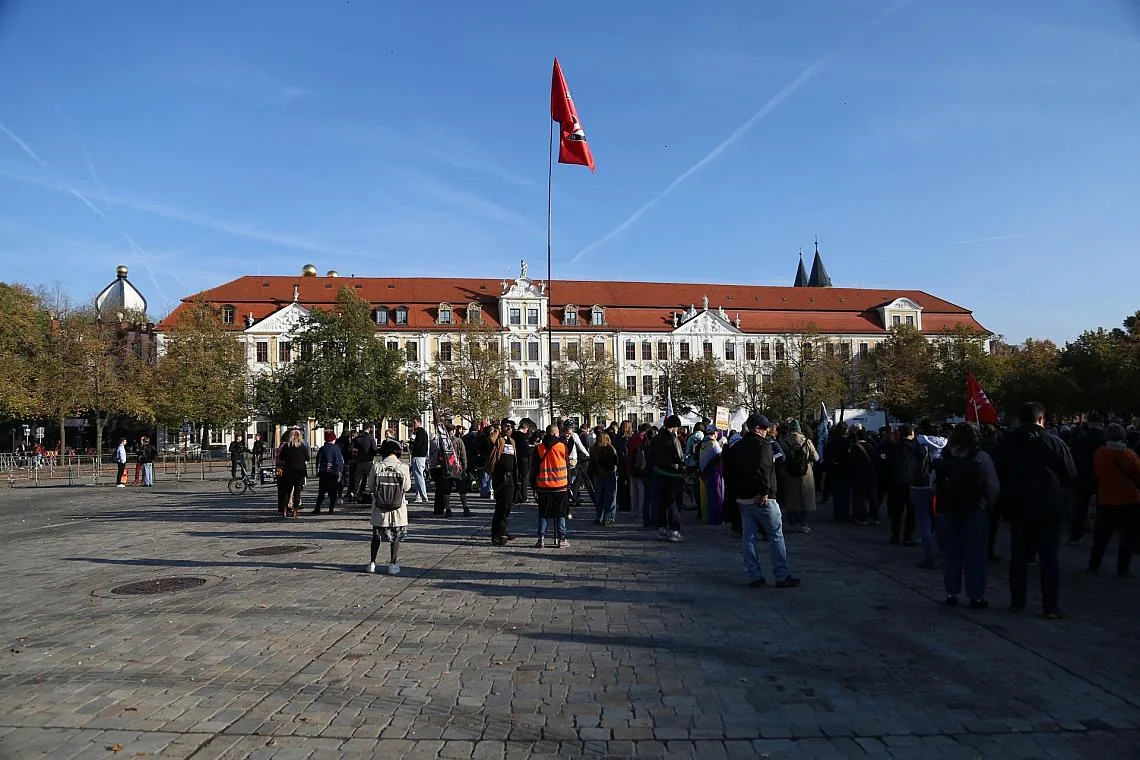
Tobias Rausch, a candidate from the far-right Alternative for Germany (AfD), has been elected speaker of the Saxony-Anhalt state parliament, marking the first time a far-right party has held the post since World War Two. The election took place during the parliament's inaugural session following the AfD's decisive victory in last month's state election, where it fell three seats short of a majority. Rausch won the vote comfortably with the backing of nine MPs from other parties, including five from the hard-left BSW and four unidentified MPs, sparking speculation that some members of Chancellor Friedrich Merz's conservative CDU may have broken party ranks. The Greens party leader Susan Sziborra-Seidlitz called the result a 'watershed moment' and said 'a line has been crossed.' Rausch, a trained estate agent and close confidant of local AfD leader Ulrich Siegmund, rejected the post-war political firewall against the far right, stating 'the days of political firewalls should be a thing of the past.' The role is largely symbolic but includes chairing debates and controlling access to the parliament building. More than 300 protesters demonstrated outside, holding signs reading 'Never again is now.' Siegmund's bid to become state premier in December remains uncertain, as the BSW has refused to enter a coalition with the AfD.
Read sourceAfD Wins Vice President Post in Saxony-Anhalt Parliament as Hans-Thomas Tillschneider Elected
On October 6, 2026, the newly elected parliament of Saxony-Anhalt convened for its first session in Magdeburg. In a historic first for Germany, AfD politician Tobias Rausch was elected as President of the State Parliament (Landtagspräsident) with 48 votes, four more than the combined total of the AfD and BSW parties. Subsequently, the AfD's Hans-Thomas Tillschneider, described as a right-wing figure with ties to Russia, was elected as Vice President with 44 votes. The elections drew sharp criticism from the SPD, Greens, and Left parties. Left co-leader Luigi Pantisano alleged a 'blue-black cartel' involving the CDU, suggesting CDU members provided the extra votes for Rausch. The Greens warned of defending freedom and minority rights against a potential AfD takeover. The session was briefly interrupted for the SPD to discuss its candidate for a second vice president position. The AfD also sought to change parliamentary rules to allow its party to nominate candidates for vice president posts, a move previously restricted.
Read sourceAfD calls election of its candidate for state parliament president a 'caesura' in Saxony-Anhalt
The newly elected state parliament of Saxony-Anhalt convened for its first session on October 6, 2026, with the far-right Alternative for Germany (AfD) nominating Tobias Rausch as its candidate for state parliament president. If elected, Rausch would become the first AfD politician to hold this office in a German state parliament. The AfD's parliamentary director Bernd Baumann described the potential election as a 'caesura,' arguing that other parties had previously denied the AfD positions it was entitled to. Rausch pledged to act in a non-partisan manner, stating his principle would be 'hard in the matter, but fair in the person.' The Sahra Wagenknecht Alliance (BSW) indicated it would support the AfD candidate, with BSW vice-chair Christian Leye declaring the 'firewall' against the AfD had failed. However, the BSW ruled out supporting an AfD candidate for minister-president. The Christian Democratic Union (CDU) announced its abstention from the vote. Protests were held outside the parliament building. The session was expected to be interrupted after the presidential election to discuss changes to the rules of procedure, as the AfD and BSW seek to allow the AfD to also hold a vice-presidential post.
Read sourceLeft-wing interim president opens Saxony-Anhalt parliament session, cites 'Antifa clause' and 'Spiderman'
The newly elected state parliament of Saxony-Anhalt convened for its constituent session in Magdeburg on October 6, 2026. The session was opened by Eva von Angern (Left Party), the oldest member serving as interim president. In her opening speech, von Angern criticized the AfD's behavior as 'power-drunk,' citing demands for extra committee seats and relocating other factions. She quoted Article 37a of the state constitution, calling it the 'Antifa clause,' which obligates state authorities to prevent the revival of Nazi ideology and racist activities. She also quoted 'Spiderman' ('With great power comes great responsibility'), a line given to her by her son. The AfD, which won nearly 44% of the vote, nominated Tobias Rausch for the position of Landtag president, a first for the party. Rausch pledged to be nonpartisan and fair. The BSW party indicated it would support the AfD's candidate for president but not for minister-president. Protests were held outside the parliament building.
Read sourceFar-right hardliner elected vice president of Saxony-Anhalt state parliament
On October 6, 2026, the newly elected state parliament of Saxony-Anhalt held its constituent session. The far-right Alternative for Germany (AfD), the strongest faction with 39 of 83 seats, secured the presidency and a vice presidency. AfD parliamentary manager Tobias Rausch was elected parliament president with 48 of 82 votes, a tally that required support beyond the AfD and its likely ally BSW (Sahra Wagenknecht Alliance). The Christian Democratic Union (CDU), which had announced it would abstain, had only five abstentions, leading to speculation that some CDU members voted for Rausch. Subsequently, hardliner Hans-Thomas Tillschneider (AfD) was elected vice president with 44 votes, despite the BSW and CDU denying they voted for him. The CDU's Carsten Borchert was also elected as a vice president, while the SPD candidate Armin Willingmann failed to secure the third vice presidency. The results have raised questions about the collapse of the so-called 'firewall' (Brandmauer) against cooperation with the far-right in German state politics.
Read sourceFirst AfD State Parliament President: Saxony-Anhalt Session Begins Today
The newly elected state parliament of Saxony-Anhalt convenes for its inaugural session in Magdeburg on October 6, 2026. The main agenda item is the election of a new state parliament president. The AfD, as the strongest parliamentary group, has nominated Tobias Rausch, who is expected to become the first AfD politician to hold this office. The BSW party has announced it will support the AfD candidate, giving the two parties a combined 44 seats, above the absolute majority threshold of 42. CDU, SPD, Linke, and Greens together hold 39 seats. CDU parliamentary group leader Sven Schulze has ruled out votes from his party for the AfD candidate, stating the CDU will abstain in the secret ballot. BSW Vice Chairman Christian Leye defended the support, arguing the 'firewall' against the AfD has failed and that a party with nearly 44% of the vote should hold the presidency. He ruled out supporting an AfD candidate for minister-president. The session will also include elections for vice-presidents, with candidates from AfD, CDU, and SPD. Protests have been called outside the parliament building.
Read source