Hegemann, Nagel and Deisseroth win 2026 Nobel Prize in Medicine for optogenetics
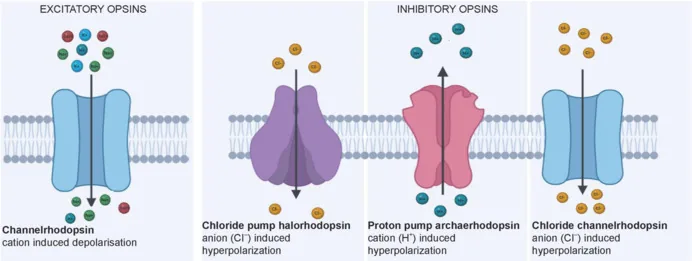
The 2026 Nobel Prize in Physiology or Medicine was awarded to German researchers Peter Hegemann and Georg Nagel, and US scientist Karl Deisseroth, for their discoveries in optogenetics. The Karolinska Institute in Stockholm announced the prize on October 5, 2026. Optogenetics uses light to control neurons genetically modified to express light-sensitive proteins. Hegemann and Nagel discovered channelrhodopsin in algae; Deisseroth applied it to activate neurons. The prize is 12 million Swedish kronor, shared equally.
 Illustration
Editorial responsibility
- No named human review is recorded for this page.
- Reports are grouped by semantic similarity and deterministic rules. Language models may assist titles, summaries, translation and cross-source analysis; the page reads the event directly, while its address stays stable when the title changes.
- Summary covers the current reports
Cross-source coverage
Reporting timeline
Nobel Prize in Medicine Awarded to German Researchers Hegemann and Nagel and US Scientist Deisseroth
The 2026 Nobel Prize in Physiology or Medicine has been awarded to German researchers Peter Hegemann and Georg Nagel, along with American scientist Karl Deisseroth, for their groundbreaking discoveries in optogenetics. The Karolinska Institute in Sweden announced the award on October 5, 2026. Optogenetics is a technique that uses light to control neurons and other cells that have been genetically modified to express light-sensitive proteins. The work of Hegemann, Nagel, and Deisseroth has revolutionized neuroscience by enabling precise control of brain activity, leading to advances in understanding neurological disorders and potential treatments. The prize recognizes their contributions to developing this field, which combines optics and genetics to manipulate cellular activity.
Read sourceNobel Prize in Medicine awarded to Deisseroth, Hegemann, and Nagel for optogenetics
The 2026 Nobel Prize in Physiology or Medicine has been awarded to US psychiatrist and neurologist Karl Deisseroth and his German colleagues Peter Hegemann and Georg Nagel for their pioneering work in optogenetics, as reported by BBC News on October 5, 2026. The Nobel committee praised the trio for laying the foundation of a new era in neuroscience, revealing the neural circuits behind specific memories, feelings, and behaviors relevant to neurological and psychiatric disorders. Their research has helped scientists better understand how the human brain works. In clinical medicine, researchers are using the optogenetics method to try to restore sight in people with visual impairment.
Read source2026 Nobel Prize in Medicine Awarded to Two Germans and One US Researcher for Optogenetics
The 2026 Nobel Prize in Physiology or Medicine has been awarded to German researchers Peter Hegemann and Georg Nagel, along with US researcher Karl Deisseroth, for their discoveries in light-gated ion channels and optogenetics, as announced by the Karolinska Institute in Stockholm. Optogenetics is a method that allows precise control of cells, particularly neurons, using light, combining genetic and optical techniques. Hegemann and Nagel discovered the protein channelrhodopsin, which makes cells light-sensitive, while Deisseroth applied the gene for this protein in rat neurons to activate them with light. The prize is worth approximately one million euros (12 million Swedish kronor), recently increased by the Nobel Foundation to mark the 125th anniversary of the Nobel Prize. The award ceremony will take place on December 10, the anniversary of Alfred Nobel's death. This year's prize begins the Nobel announcement series, with physics and chemistry awards to follow.
Read sourceShow 3 older updatesHide older updates
2026 Nobel Prize in Medicine awarded to two German and one US researcher for optogenetics
The 2026 Nobel Prize in Physiology or Medicine has been awarded to German researchers Peter Hegemann (Humboldt-Universität Berlin) and Georg Nagel (Universität Würzburg), along with US researcher Karl Deisseroth, for their discoveries in light-controlled ion channels and optogenetics, as announced by the Karolinska Institute in Stockholm. Optogenetics is a method that uses light to precisely turn cells—typically neurons—on or off, combining genetic and optical techniques to control cellular activity in living tissue and freely moving animals. Hegemann and Nagel discovered the protein channelrhodopsin, which makes cells sensitive to light, while Deisseroth introduced the gene for this protein into rat neurons, enabling activation of nerve cells with light. The prize is worth 12 million Swedish kronor (approximately 1 million euros), recently increased by the Nobel Foundation to mark the 125th anniversary of the Nobel Prize. The award ceremony will take place on December 10, the anniversary of Alfred Nobel's death.
Read sourceNobel Prize in Medicine Awarded to Two German and One US Scientist for Optogenetics
The 2026 Nobel Prize in Physiology or Medicine has been awarded to German researchers Peter Hegemann (71) and Georg Nagel (73), along with US scientist Karl Deisseroth (54), for their discoveries in optogenetics. The Karolinska Institute announced the prize, highlighting how the field demonstrates the formation of memories, feelings, and behaviors by nerve cells in the brain. Hegemann and Nagel discovered the light-sensitive protein channelrhodopsin in algae, which Deisseroth later used to activate neurons in rats and living mice. The technique has therapeutic applications, such as restoring rudimentary vision in a blind patient with retinitis pigmentosa using a viral injection and special glasses. The prize is endowed with 12 million Swedish kronor (about $1.2 million), shared among the laureates. This marks the first German winner of the Medicine Nobel since Thomas Südhof in 2013 and the first German winner overall since Emil von Behring 125 years ago.
Read sourceMedicine Nobel Prize awarded to two German and one US researcher for optogenetics
The 2026 Nobel Prize in Physiology or Medicine has been awarded to Peter Hegemann (Humboldt-Universität zu Berlin), Georg Nagel (University of Würzburg), and Karl Deisseroth (Stanford University) for their discoveries in optogenetics. The Karolinska Institute announced the prize, recognizing a method that allows nerve cells in the brain to be activated or deactivated using light. The foundation was laid by Hegemann and Nagel with the discovery of the protein channelrhodopsin in a single-celled alga. Deisseroth then developed this into a light-controlled switch for nerve cells. The Nobel committee chairman, Per Svenningsson, described the method as opening possibilities "that one could only dream of before." Optogenetics is now used worldwide in research laboratories to study memory, emotions, and behavior in living brains.
Read source