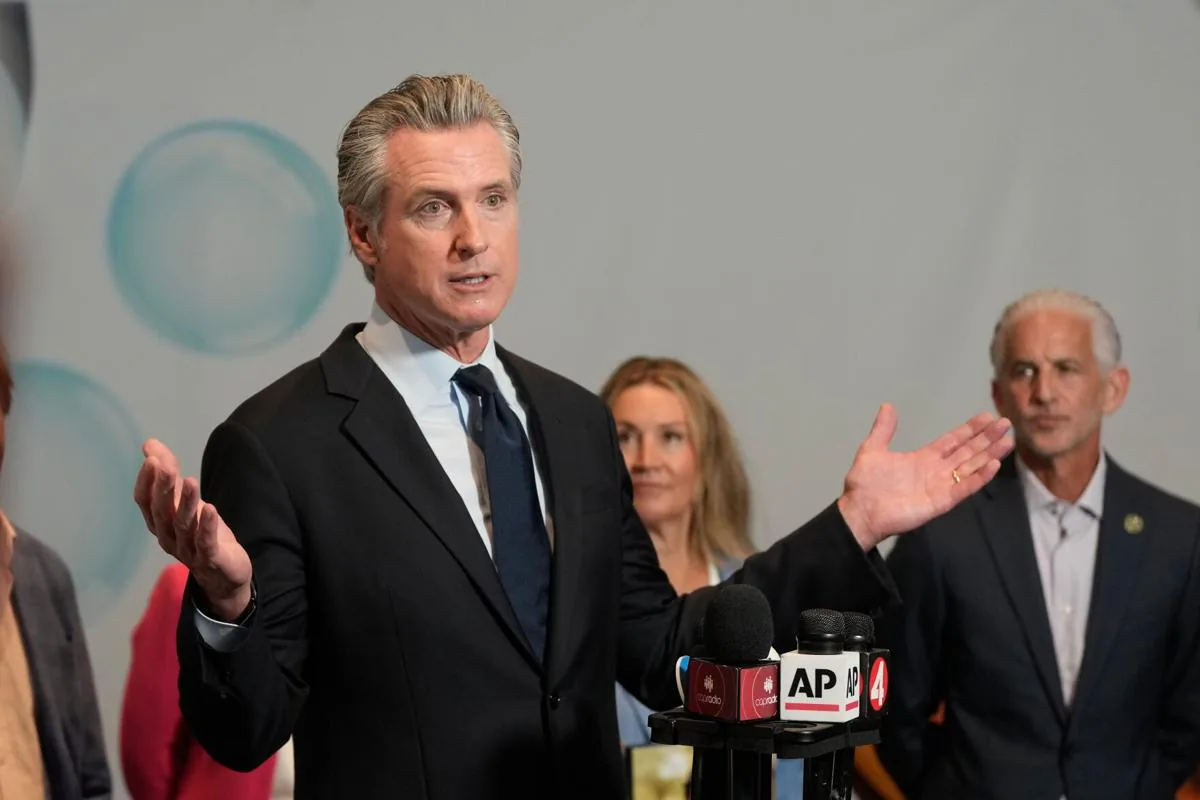
California voters rejected Proposition 40, a ballot measure that would have imposed a one-time 5% tax on residents and trusts with net worth over $1 billion, the Associated Press called nearly a week after Election Day. About 53% voted against and 47% in favor. Opponents, backed by a campaign war chest far larger than supporters', argued the tax would drive wealthy residents out of state and harm the economy. Proponents, led by SEIU-United Healthcare Workers West, projected up to $100 billion over five years for healthcare and education, and vowed to pursue a similar measure in 2028.
California voters are set to decide on Proposition 40, a one-time 5% tax on the net worth of the state's roughly 200 billionaires, aimed at raising $100 billion to offset federal healthcare funding cuts. Supporters, including SEIU-United Healthcare Workers West, call it a fair-share, short-term fix; opponents including Governor Gavin Newsom and Google co-founder Sergey Brin warn of capital flight and lost income tax revenue. At least six billionaires reportedly left California before the January 1, 2026 residency deadline. Polls show the measure narrowly divided, and competing Propositions 41 and 42 could nullify it.
AI coding startup Cognition announced its annualized revenue run rate has surpassed $1 billion, doubling from $492 million in May. The company recently closed a $2 billion Series E funding round led by Andreessen Horowitz and Accel, reaching a $48 billion valuation. Its AI agent Devin is used by clients including Nvidia, Citigroup, and Mercedes-Benz.
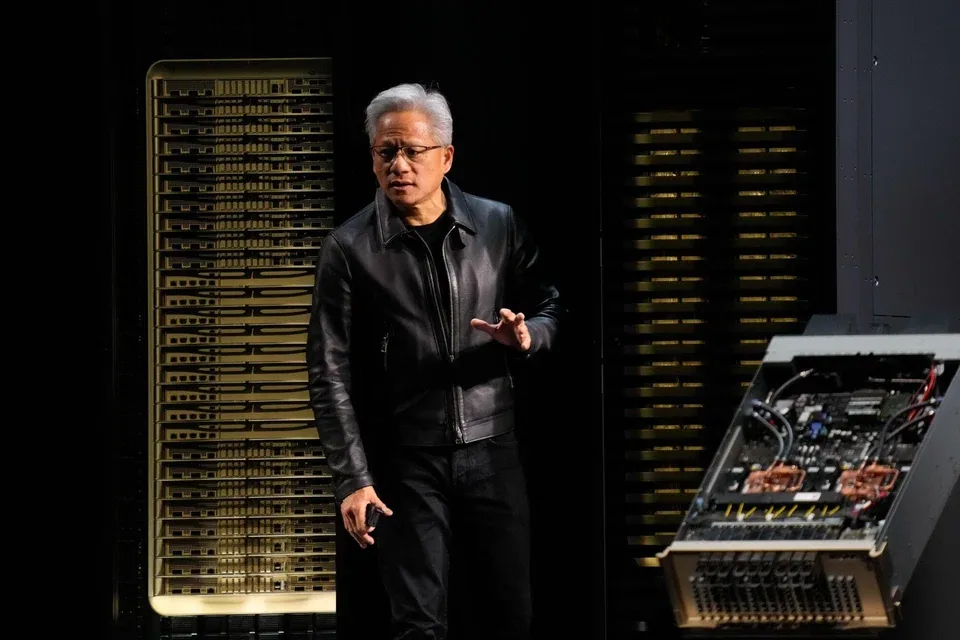
Nvidia CEO Jensen Huang said in a CBS News interview that he would view paying an estimated $8 billion in additional taxes over five years as a privilege if California voters approve a proposed one-time 5% billionaire tax on residents with net worth of at least $1 billion. Huang, whose net worth is estimated at over $180 billion, said he is not afraid of paying taxes but is afraid of being poor. The measure, set for a vote in fall 2026, would raise an estimated $108 billion for public healthcare, education, and food assistance.
The US-Israeli defense startup Covenant plans to mass-produce its Anthem cruise missile near Leipzig, Saxony, Germany, starting in 2027. The missile, with a 1,500 km range and 200 kg warhead, aims to cost under $1 million per unit. The German Defense Ministry confirmed talks with Covenant to fill a long-range strike gap. The company, founded in 2024 and backed by Peter Thiel's Founders Fund, has raised over $250 million.
5 reports · 3 sources · Updated
Periodic recap
What changed for this subject in each tracking window — generated from matched events, delta-first.
· 1 event in window
The only event matched in this period again has no direct connection to Peter Thiel himself: California Proposition 40, a one-time 5% wealth tax on residents and trusts with assets over $1 billion, was rejected by voters, with the Associated Press calling it at about 52.8% opposed to 47.2% in favor nearly a week after Election Day. Compared with the previous period, this moves the measure from pre-vote developments to a final outcome, but the reporting does not mention Thiel and contains no new information on his investments, statements, or personal movements. The period is of limited substance.
California voters rejected Proposition 40, with the Associated Press calling it at about 52.8% opposed to 47.2% in favor nearly a week after Election Day.
The measure would have imposed a one-time 5% wealth tax on residents and trusts with assets over $1 billion, and was backed by SEIU-United Healthcare Workers West.
Supporters projected up to $100 billion over five years for Medi-Cal and education, while the Legislative Analyst's Office projected "tens of billions" and warned of up to $1 billion in lost annual income-tax revenue.
Opponents included Gov. Gavin Newsom and tech figures such as Sergey Brin, and outspent supporters heavily; backers vowed to pursue a similar measure in 2028.
The reporting does not mention Peter Thiel himself.
Earlier recaps
· 1 event in window
The only event matched in this period has no direct connection to Peter Thiel himself; it concerns pre-vote developments around California Proposition 40, a one-time 5% wealth tax on roughly 200 billionaires. As in the previous period, there is no new information on Thiel's own investments, statements, or personal movements. The event itself is of limited substance and does not mention Thiel.
· 1 event in window
Only one event indirectly related to Peter Thiel appeared in this period. AI coding startup Cognition AI, which is backed by Thiel's Founders Fund, announced an annualized revenue run rate of $1 billion and a new valuation of $48 billion following a funding round. The event itself concerns Cognition's business progress and does not include direct statements or actions from Thiel. Similar to the previous period, new information on Thiel's direct investments or personal movements remains absent.
· 1 event in window
Only one event related to Peter Thiel appeared in this period, and it is not directly about Thiel himself but rather Nvidia CEO Jensen Huang's stance on a California wealth tax proposal. The report mentions Huang contrasting his position with other billionaires who oppose the measure, with Thiel cited as one of the prominent opponents. No new developments regarding Thiel's investments in Argentina or personal movements emerged during this window.
· 1 event in window
Peter Thiel's hedge fund, Thiel Macro LLC, disclosed the acquisition of a roughly 1% stake in Argentine shale oil producer Vista Energy, valued at approximately $76 million, making it the fund's second-largest disclosed position. The move extends Thiel's recent focus on Argentina, following his relocation to Buenos Aires and an April 2026 meeting with President Javier Milei to discuss economic reforms and attracting foreign capital.
· 1 event in window
Palantir Technologies, co-founded by Peter Thiel, reported Q2 earnings with total revenue surging 93% year-over-year to $1.94 billion, significantly beating estimates. U.S. commercial revenue jumped 149% and government revenue rose 90%, driven by what the company described as AI sovereignty demand. The company raised its full-year guidance, and shares jumped up to 16% in after-hours trading.
Tracked events
Events matched to this subject by the tracking pipeline, with signal scores.
 Illustration