FCC Chairman Brendan Carr posted on X warning broadcasters against airing what he called "entirely Fake Polls and Suppression Polls," saying they interfere with the electoral process and lack scientific basis. He cited federal license prohibitions on "News Distortion" and "Broadcast Hoaxes." The warning came less than two weeks before November's midterm elections and followed Carr's order to review broadcast licenses for eight ABC TV stations. Legal experts and Democratic FCC Commissioner Anna Gomez said the rules are narrowly tailored and do not apply to broadcasters reporting polling data in good faith.
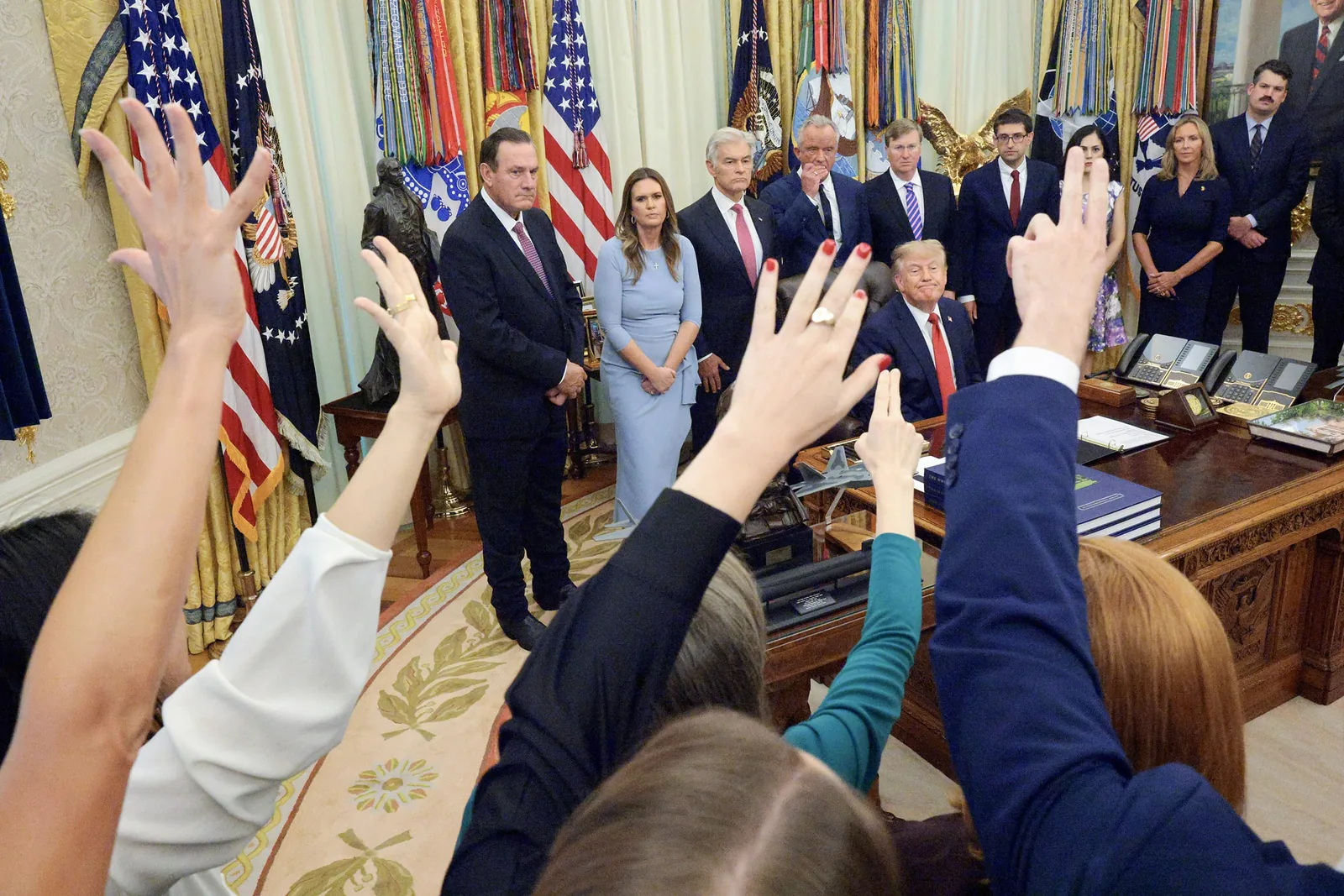
President Donald Trump banned CNN, MSNBC, and Politico from the White House on September 18, 2026, accusing them of "fake news." Their press credentials were revoked and reporters denied entry. The outlets sued, citing First Amendment violations. On September 24, Judge Timothy Kelly issued a temporary restraining order restoring access for 14 days, finding the ban likely violated due process. The White House initially defied the order, barring reporters from a state dinner for Chinese President Xi Jinping, before eventually restoring access later that day.
Late-night host Jimmy Kimmel announced his interview with Texas Democratic Senate candidate James Talarico would not air on ABC television due to threats from the Federal Communications Commission (FCC) under the Trump administration, citing the equal time rule. The interview was instead posted to YouTube, garnering over 3.6 million views in 16 hours. The White House denied the allegations. This marks the second time in 2026 Talarico’s interview was bumped from a late-night show.
18 reports · 5 sources · Updated
Periodic recap
What changed for this subject in each tracking window — generated from matched events, delta-first.
· 1 event in window
In this period, the media conflict involving the Federal Communications Commission (FCC) escalated further. President Trump banned CNN, MSNBC, and Politico from the White House, accusing them of "fake news." The banned outlets filed a First Amendment lawsuit, and major TV networks suspended pooled coverage in protest. A federal court hearing on September 23 concluded without an immediate ruling.
President Trump banned CNN, MSNBC, and Politico from the White House on September 18, accusing them of "fake news."
The banned outlets filed a First Amendment lawsuit seeking reinstatement of their access.
Major TV networks suspended pooled coverage in protest, while the White House launched "Trump TV" and defended the ban on national security grounds.
A federal court hearing on September 23 concluded without an immediate ruling.
Earlier recaps
· 1 event in window
In this period, tensions between the Federal Communications Commission (FCC) and the media escalated further. Late-night host Jimmy Kimmel moved an interview with a Texas Senate candidate from ABC to YouTube, citing threats from the FCC. Kimmel publicly criticized the move as censorship, sparking renewed debate over free speech.
· 1 event in window
In this period, former President Donald Trump threatened to report NBC host Kristen Welker to the Federal Communications Commission (FCC) over her characterization of his primary endorsement record. Trump cited high success rates for his endorsed candidates and urged FCC Chair Brendan Carr to act on the comment made on a local affiliate. The threat is unusual as the FCC generally does not regulate news content, continuing the tense dynamic between the agency and the media.
· 1 event in window
Following the repeal of the broadcast ownership cap, tensions between the FCC and major media have sharply escalated. Disney-owned ABC filed a lawsuit against the FCC and the Trump administration, alleging unconstitutional retaliatory regulation over program content. The FCC ordered early license renewals for eight ABC stations, which ABC claims is punishment for its editorial content and is seeking to block in court.
· 1 event in window
The FCC voted during this period to repeal the 39% national broadcast ownership cap, replacing it with a case-by-case review. The 2-1 party-line vote saw Chairman Brendan Carr argue the cap was outdated, while Democratic Commissioner Anna Gomez contended the FCC lacks congressional authority. Legal challenges are expected, and the move has raised concerns about media consolidation and political influence.
· 1 event in window
The FCC, acting under the Trump administration, issued a ban on imports of new Chinese-made humanoid and quadruped robots and connected power inverters during this period. The ban is based on National Security Determinations, citing risks of surveillance, data exfiltration, and supply chain vulnerabilities. China condemned the move as smearing its companies. Existing devices are unaffected, and exemptions are possible through the Department of War.
Tracked events
Events matched to this subject by the tracking pipeline, with signal scores.
 Reference image