The Trump administration has petitioned the U.S. Supreme Court to permit the United States Postal Service to enforce new restrictions on mail-in ballot handling ahead of the November midterm elections. The Department of Justice filed an emergency request to lift a lower court's block on the USPS plan, arguing it prevents fraud and ensures efficiency. Critics say the rules suppress turnout. The high court's decision could significantly affect voting access nationwide.
On September 2, 2026, U.S. District Judge Leonie Brinkema in Virginia rejected the Department of Justice's attempt to force Alphabet's Google to divest its AdX advertising exchange, despite having found Google illegally monopolized ad server and ad exchange markets. The ruling marks the third time a judge has rejected a U.S. antitrust breakup bid against Big Tech. Behavioral remedies were accepted instead, and the DOJ is considering an appeal.
Republican Rep. Cory Mills lost Florida's 7th Congressional District primary to Ryan Elijah after facing multiple scandals, including a House ethics probe and DOJ investigation into sexual misconduct, harassment, campaign finance violations, and dating a 19-year-old. President Trump, who endorsed Mills in February, later claimed he advised Mills to drop out and endorsed Elijah after the loss. Mills' defeat by a 13-point margin in a district Trump carried by 12 points signals potential weakening of Trump's influence among Florida Republicans.
Walmart agreed to pay $50 million to settle a U.S. Department of Justice lawsuit alleging its pharmacies unlawfully dispensed opioid prescriptions since 2013, violating the Controlled Substances Act. The settlement, confirmed on August 28, 2026, also requires Walmart to implement tighter pharmacist oversight and a DEA-monitored compliance program. Walmart did not admit liability and called the amount immaterial. The DOJ had originally sought billions in penalties.
The Kennedy Center board, appointed by President Trump, voted on August 13, 2026, to inscribe "Restored and Renovated by President Donald J. Trump" on the facade and rename the plaza after him, defying a federal court order that had mandated removal of his name. The board also voted to close the center for two years of renovations. Democratic Rep. Joyce Beatty, who won the original lawsuit, condemned the move as a circumvention of the ruling. A federal judge has set an August 18 deadline for the board to report on plans.
The U.S. Supreme Court, in a 6-3 conservative majority ruling, lifted a lower court’s nationwide injunction on former President Donald Trump’s executive order restricting mail-in voting. The order directs the Postal Service to deny ballots to voters not on federal lists and tasks DHS with citizenship verification. The Court ruled Democratic-led states sued prematurely, leaving the order’s legality unresolved. Dissenting justices warned of voter disenfranchisement. Democratic officials from 23 states and D.C. vowed to continue legal challenges, calling the order an unconstitutional power grab ahead of the midterm elections.
On August 12-13, 2026, President Trump signed a presidential memorandum creating a program that allows vetted U.S. private companies to conduct offensive cyber operations, including surveillance and system disruption, against transnational criminal organizations, particularly ransomware groups. Overseen by DHS and DOJ, the program requires firms to meet security standards, post escrow, and obtain approval for each operation. Operations risking loss of life or armed attack are prohibited, though a classified annex allows exceptions. This marks a shift from information-sharing to active disruption.
Senator Tim Sheehy (R-Mont.) introduced the Special Operations Forces Concealed Carry Act on August 14, 2026, allowing active-duty and retired special operations personnel to carry concealed firearms nationwide, bypassing state restrictions. The bill mirrors the Law Enforcement Officers Safety Act (LEOSA) and requires annual firearms qualification tests and a Justice Department concealed carry class. Representative Pat Harrigan filed a companion House bill. The bill is accompanied by controversy over Sheehy’s conflicting accounts of a 2015 gunshot wound.
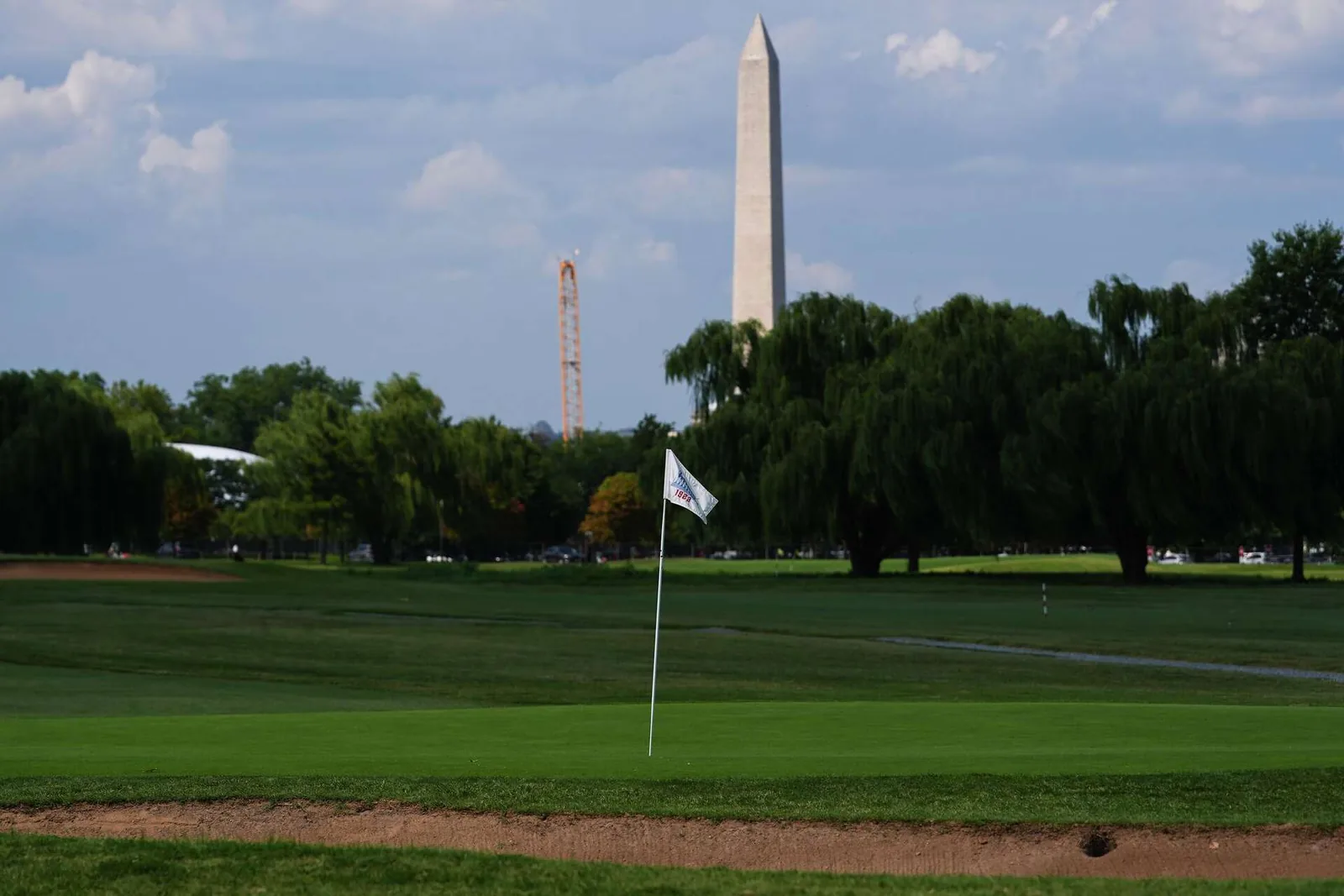
The U.S. Department of Justice dropped a vandalism charge against former Olympic canoeist David Hearn, who was accused of damaging the Lincoln Memorial Reflecting Pool in Washington, D.C. Prosecutors cited a flawed and rushed renovation—not intentional vandalism—as the cause of the damage. The case had been pursued under the Trump administration, with President Trump publicly criticizing U.S. Attorney Jeanine Pirro for dismissing it. Hearn’s attorneys called the arrest an abuse of power, and the dismissal undermines remaining vandalism charges.
President Trump suggested temporarily withdrawing Todd Blanche’s nomination for U.S. Attorney General after Republican Senators Cornyn and Tillis blocked a committee vote. The holdouts demand changes to a $1.8 billion IRS settlement granting Trump immunity from audits. Blanche can remain acting AG, but Trump may wait until the senators leave office next year, risking a Democratic Senate takeover.
On August 10-11, 2026, U.S. President Donald Trump signed an executive order reducing recommended childhood vaccines from 17 to 11 diseases, removing universal recommendations for hepatitis B, COVID-19, and flu. The order also calls for splitting the combined MMR vaccine into three separate shots, based on debunked claims linking vaccines to autism. Health experts and lawmakers strongly oppose the move, warning it increases infection risks amid a major measles outbreak. The order’s impact is limited as states control vaccine mandates.
The Senate Homeland Security and Governmental Affairs Committee voted along party lines (8-5 or 8-7) to hold Dr. Anthony Fauci in criminal contempt of Congress for refusing to answer questions about the COVID-19 pandemic, invoking his Fifth Amendment rights. Chairman Rand Paul argues the pardon from former President Biden invalidates Fauci’s Fifth Amendment claim. The resolution will be sent to Vice President J.D. Vance and then to the Department of Justice for potential prosecution. Democrats criticize the process as a rushed political stunt. If convicted, Fauci faces up to one year in prison.
New Mexico Attorney General Raúl Torrez filed a federal lawsuit against the U.S. Justice Department and acting Attorney General Todd Blanche, accusing them of stonewalling the state's criminal investigation into sex trafficking and abuse at Jeffrey Epstein's Zorro Ranch. The state seeks unredacted federal files, citing over 13,000 references to the ranch in Epstein documents. The DOJ has allegedly ignored multiple requests, delaying justice for survivors. The ranch, near Santa Fe, was sold in 2023.
On July 15, 2026, the U.S. Department of Justice filed its first-ever application to activate the Alien Terrorist Removal Court (ATRC), a specialized Article III federal court created in 1996 but never used. The ATRC is designed for removal proceedings involving alleged 'alien terrorists' and national security cases. The court's inaugural order directed DOJ to file a supplement, suggesting the application needed more consideration. The article analyzes the ATRC's procedures, including secret ex parte application review, public removal hearings, and appeals to the D.C. Circuit. While acknowledging skepticism about the Trump administration's motives, the author argues the ATRC's activation could improve due process for noncitizens compared to current administrative removal proceedings. The piece also notes the broad statutory definition of 'alien terrorist,' which could encompass activities beyond obvious terrorism, raising concerns about potential overreach.
Former FBI Director James Comey has filed a motion to dismiss a federal indictment accusing him of threatening President Donald Trump. The charge stems from an Instagram photo of seashells arranged to read "86 47," which prosecutors interpreted as a death threat. Comey’s lawyers argue the post is protected political hyperbole under the First Amendment, not a "true threat." They also allege vindictive prosecution and illegal Secret Service surveillance of Comey and his wife. The DOJ has not yet responded.
The deadline for the Trump administration to request a Supreme Court rehearing on President Trump's executive order attempting to end birthright citizenship (jus soli) passed on Tuesday without a filing from the Department of Justice. The administration had 25 days to petition the court for reconsideration of the order, which sought to strip automatic citizenship rights for children born in the U.S. to non-citizen parents. The missed deadline effectively ends the legal avenue for the administration to challenge lower court rulings blocking the order, though other legal options may remain. The Hill reported the development as a significant procedural setback for the president's immigration policy.
Acting Attorney General Todd Blanche faced a contentious Senate confirmation hearing on July 15, 2026, where he apologized for failing to redact Epstein victims' names in released documents. He backtracked on a promise to meet survivors, claiming legal prohibitions. Epstein survivor Dani Bensky testified against him, and 19 victims publicly opposed his nomination after reports revealed his role in White House meetings on Epstein file transparency.
On July 26, 2026, the 1st U.S. Circuit Court of Appeals upheld a lower court’s injunction blocking former President Donald Trump’s executive order to create a federal voter eligibility list and restrict mail-in ballots to listed individuals. The Trump administration has now asked the Supreme Court to intervene, arguing the order prevents non-citizen voting. Critics say the order oversteps federal authority and could disenfranchise voters. The case, involving 23 states and D.C., could impact the November midterm elections.
The FBI's Rapid Response account on X launched a social media attack on The Atlantic after the magazine filed a motion to dismiss Kash Patel's $250 million defamation lawsuit. The Atlantic argued Patel failed to plausibly allege actual malice in its April article, which reported that Patel drank to excess, delayed operations, and was often unreachable, raising national security concerns. The FBI account called The Atlantic a 'slop rag' with 'zero interest in real journalism.' The Atlantic also filed a motion to stay discovery except for Touhy requests, allowing it to seek documents from the FBI and DOJ. Editor Jeffrey Goldberg stated, 'If Director Patel did not want to face this process, he should not have filed this suit.' The article questions the appropriateness of a government agency defending its director in such a manner.
David Hearn, a 67-year-old three-time U.S. Olympic canoeist, was indicted on a felony destruction of property charge for allegedly damaging sealant at the Lincoln Memorial Reflecting Pool in Washington, D.C. He pleaded not guilty, with his attorney calling him a political scapegoat amid controversy over the Trump administration’s renovation project. The charge carries up to 10 years in prison, though a lesser sentence is expected. A judge rejected prosecutors’ request to bar Hearn from the pool.
The Trump administration, through the Department of Justice (DOJ), filed a lawsuit against Milwaukee on Thursday challenging the city's ban on law enforcement wearing face coverings while on duty. The DOJ argues that the measure is unconstitutional when applied to federal agents, citing recent legal victories in similar cases against California, Virginia, and Philadelphia. The lawsuit is part of a broader federal effort to override local ordinances that restrict federal law enforcement activities, particularly regarding mask-wearing. The DOJ is asking the court to join the growing number of rulings that have sided with the administration on this issue.
On July 23, 2026, cryptocurrency exchange BitMEX announced it will cease operations on September 23, 2026, following a strategic review by owner HDR Global Trading. New sign-ups have halted, and trading will be restricted after August 26. Hours after the announcement, a class-action lawsuit was filed in New York alleging forced liquidations, theft of Bitcoin, and insider trading by co-founders Arthur Hayes, Ben Delo, and Samuel Reed. The exchange, which pioneered perpetual swaps, had previously pleaded guilty to Bank Secrecy Act violations and paid $100 million in penalties.
House Republicans, led by Judiciary Committee Chair Jim Jordan, filed a criminal referral against former special counsel Jack Smith, accusing him of making false statements to Congress. The dispute centers on whether Smith sought search warrants for the content of text messages from members of Congress. Smith testified he did not, but Senator Chuck Grassley later claimed DOJ records showed Smith's team reviewed text message contents from 44 members. Legal experts clarified that Smith requested toll records (time/date metadata), not content, and that a separate National Archives collection included exchanges with Congress members—but Republicans never asked about that. Democrats and Smith's lawyers dismissed the referral as baseless and vindictive, noting Smith gave truthful, responsive answers. The article also includes a separate item about President Trump threatening Iran over Houthi attacks on Saudi ships.
House Republicans, led by Judiciary Committee Chair Jim Jordan, filed a criminal referral against former special counsel Jack Smith, alleging he made false statements to Congress. The dispute centers on whether Smith sought search warrants for the content of text messages from members of Congress. Smith testified he did not, but Senator Chuck Grassley later posted that DOJ records showed Smith's team reviewed text message contents from 44 members. Legal experts clarified that Smith requested toll records (time/date metadata), not message content, and that a separate instance involved White House phone records from the National Archives. House Democrats and Smith's lawyers denounced the referral as baseless and vindictive, noting Smith provided truthful, responsive answers.
The New Republic reports that Department of Justice lawyers are refusing to put certain information in writing, fearing it could be used against them in court. This stems from the prosecution of two journalists, including Georgia Ellyse Fort, over their coverage of an anti-ICE protest in Minnesota. Fort faces three felonies, including a hate crime. Her defense accuses the government of spying, and a judge has barred the use of toll records and cell phone simulators. A Homeland Security Investigations agent allegedly used customs summonses to gather information on Fort. In a letter, Fort's lawyers noted a phone call with DOJ lawyer Ned Hedley, who indicated the government would not respond in writing out of concern that statements could be presented to the court. The article suggests this behavior indicates the Trump administration may be hiding illegal activities, undermining the government's case against the journalists.
The New Republic reports that Department of Justice lawyers are refusing to put certain information in writing, fearing it could be used against them in court. This stems from the prosecution of journalists Georgia Ellyse Fort, Don Lemon, and Michael Beute for covering an anti-ICE protest in Minnesota. Fort faces three felonies including a hate crime. Her defense counsel accuses the government of spying, and a judge has barred the use of toll records and cell phone simulators linked to Fort. A Homeland Security Investigations agent allegedly used customs summonses to obtain information about Fort. In a letter to prosecutors, Fort's lawyers noted that DOJ lawyer Ned Hedley indicated the government would not respond in writing out of concern that representations could be presented to the court. The article suggests this behavior indicates the Trump administration may be trying to hide potentially illegal activities, undermining the government's case.
The Department of Justice is prosecuting journalists Georgia Ellyse Fort, Don Lemon, and Michael Beute for covering an anti-ICE protest in Minnesota. Fort faces three felonies including a hate crime. Her defense counsel accuses the government of spying, and a judge barred the use of toll records and cell phone simulators. A Homeland Security Investigations agent allegedly used customs summonses to obtain information. In a letter, Fort's lawyers revealed that DOJ lawyer Ned Hedley indicated the government would not respond in writing for fear it could be used against them in court. The article suggests this behavior indicates the Trump administration may be hiding illegal activities, and that the case against the journalists is weak.
President Donald Trump has nominated Adam Candeub, currently FCC general counsel, to lead antitrust enforcement at the Department of Justice. Candeub has authored a Heritage Foundation report calling for criminalizing online pornography to protect marriage and promote human flourishing, and he advocates reviving historical obscenity laws like the Comstock Act. He also proposes using antitrust enforcement against Big Tech, taking into account social media's effect on happiness. Candeub was a key player in the first Trump administration's effort to repeal Section 230. Critics warn his agenda extends beyond pornography to broader government control over lawful online expression and privacy.
The article argues that major charitable giving platforms should reconsider their automatic trust in the Department of Justice under the Trump administration, following the DOJ's indictment of the Southern Poverty Law Center (SPLC) in April 2026. Three large platforms froze donations to SPLC based solely on the indictment, despite no conviction or IRS action. The author notes that federal courts across the ideological spectrum have repeatedly refused to credit DOJ representations, citing false statements, pretextual justifications, and retaliatory prosecutions. The SPLC indictment is framed as part of a broader administration campaign against civil rights organizations, following a National Security Presidential Memorandum targeting nonprofits. The piece warns that private institutions risk becoming agents of this effort by treating accusations as punishment, undermining civil society funding.
Former Education Department officials from both Republican and Democratic administrations warned that the Trump administration's plan to transfer special education programs and civil rights enforcement to other federal agencies could undermine core functions and erode oversight. Sen. Patty Murray convened a virtual press conference with former officials and advocates to criticize the moves, which are part of a broader effort to dismantle the Education Department. The Department of Health and Human Services will administer special education programs under the Office of Special Education and Rehabilitative Services (OSERS), while civil rights enforcement will move to the Department of Justice. Critics, including former OSERS and civil rights officials, argued the transfers would split disability rights responsibilities, cause delays in discrimination investigations, and separate special education from federal education policy. The Education Department defended the plan, stating it will continue to perform all statutorily required duties.
1 reports · 1 sources · Updated
Periodic recap
What changed for this subject in each tracking window — generated from matched events, delta-first.
→· 1 event in window
The Department of Justice suffered a setback in antitrust enforcement this period. A federal judge in Virginia rejected the DOJ's bid to force Google to divest its AdX advertising exchange, despite a prior ruling that Google illegally monopolized related markets. The court accepted behavioral remedies instead, and the DOJ is considering an appeal.
Judge Brinkema in Virginia rejected the DOJ's bid to force Google to sell its AdX ad exchange, accepting behavioral remedies instead.
The ruling marks the third time a judge has rejected a U.S. antitrust breakup bid against Big Tech.
The DOJ is considering an appeal of the decision.
Earlier recaps
→· 2 events in window
The Department of Justice was directly involved in two developments this period. Walmart agreed to pay $50 million to settle a DOJ lawsuit over unlawful opioid dispensing by its pharmacies, a sum far below the billions initially sought. Separately, Florida Republican Rep. Cory Mills lost his primary, with a DOJ investigation among the multiple scandals contributing to his defeat.
→· 2 events in window
Two developments this period touch on the Department of Justice only indirectly. The Supreme Court, in a 6-3 conservative majority ruling, allowed former President Trump's executive order restricting mail-in voting to proceed, though it did not resolve the order's legality. Separately, the Trump-appointed Kennedy Center board voted to inscribe his name on the facade and rename the plaza, defying a prior federal court order to remove it.
→· 1 event in window
Since the last digest, President Trump signed a presidential memorandum authorizing vetted U.S. private companies to conduct offensive cyber operations against transnational criminal organizations. The program is jointly overseen by DHS and DOJ, requiring firms to meet security standards, post escrow, and obtain approval for each operation. This marks a shift from information-sharing to active disruption. There has been no new development on Senator Sheehy's concealed carry permit bill.
→· 1 event in window
Senator Sheehy introduced a bill that would require the Department of Justice to establish a nationwide concealed carry permit for active-duty and retired special operations personnel. The bill mirrors the Law Enforcement Officers Safety Act and requires annual firearms qualification tests and a Justice Department concealed carry class. The Department of Justice has not issued any statement or taken action on this bill.
→· 1 event in window
President Trump signed an executive order reducing recommended childhood vaccines from 17 to 11 diseases, removing universal recommendations for hepatitis B, COVID-19, and flu. The order also calls for splitting the combined MMR vaccine into three separate shots, based on debunked claims linking vaccines to autism. Health experts and lawmakers warn this increases infection risks amid a major measles outbreak, though the order's impact is limited as states control vaccine mandates. The Department of Justice has not issued any statement or taken action on this executive order.
Tracked events
Events matched to this subject by the tracking pipeline, with signal scores.